


During my 25+ years in education, I’ve lost track of the number of talks I’ve given to parents and students across a wide swath of topics. Study habits. Dating. Cultivating virtue. Proper use of freedom. Unity in parenting. In looking back at my notes on these themes and others, I see how the foundation of my thoughts has, in large part, remained the same. However, the area that has seen the greatest shift in both my personal philosophy and the brass-tacks implementation as a parent is in the realm of technology.
When presenting to parents on how to create great family culture within the broader landscape of a technology-laden society, I often begin with this quote:
“They haven’t used it. We limit how much technology our kids use in the home.”
When I ask who said this, most in the audience find themselves somewhere along the spectrum of amused to amazed when they learn it was Steve Jobs himself, the founder of Apple and the visionary behind the device found today in all of our pockets. After the laughter or bewilderment subsides, the real conversation begins.
Before offering a few concrete tips for consideration, I think it’s important to ground ourselves in the kinds of people we aspire our sons and daughters to become. By this I mean, what are the behaviors or, rather, the virtues we would like to see our children embody as they mature into full-fledged adults right before our very eyes? This list is by no means exhaustive, but I would suggest if their happiness and well-being is the aim, these traits are critical for young people to develop:
Temperance — controlling your passions and desires and orient them to the greater good.
Selflessness — focusing on others, giving the people around you the full attention they deserve.
Order — understanding the right alignment of priorities and making good use of your time at the service of these obligations.
Purity — preserving and fostering a clean heart in order to better love and serve others, seeing them as God’s creation and never treating them as objects of desire.
Presence of God — maintaining an interior dialogue with God throughout the day, as much in formal times of prayer as during the regular comings and goings of the day (e.g. work, recreation, time with friends and family).
While each of these attributes could merit a separate post, suffice it to say there is a relationship between the use of technology and its impact on helping or hindering our children’s ability to develop these traits.
So what has it looked like in the Meyer family these past many years? My wife and I have been blessed with eight children spanning nearly 18 years of age. Now having grown adult children and become grandparents while still nurturing a middle schooler and a high schooler, I feel we’ve run the trial-and-error gamut with both our sons and our daughters. To be clear, I don’t purport to be an expert. And though I’m about to list a handful of practical tips you might consider if you want to see your children thrive as adults, I’ve made plenty of mistakes (my wife fewer!), I haven’t always followed my own advice, and I’ve seen these suggestions evolve throughout the years. So, with those caveats in place, take some of these bold proclamations and consider them in light of the unique family culture you wish to foster with the full freedom to ignore them as you see fit.
MONITOR PHONES.
This is the rule in our home that has changed the most over the years. What used to be, “No cell phone until college” became “Only a flip phone senior year” became “A flip phone freshman year” became “A smartphone senior year with filters” before finally settling into the present “a smartphone freshman year with filters and restrictions in place.”
A number of years ago, a good friend of mine who is a psychiatrist and does a lot of work with young people on depression and suicide said in a podcast, “Giving your teen crack cocaine is less harmful than giving them a smartphone.”
Perhaps you’re gasping right now at that statement, but his intentions were to shock the system and then quickly pivot to help parents see the harm being done if they are putting these devices into the hands of teenagers (or even younger children) without having any guardrails, monitoring, or protection in place. The temptation of the social media, gaming, and pornography rabbit holes are too great for almost any young person to withstand. Don’t fall into the trap of thinking, “But I know my daughter. She would never...” or “Not my son. I trust him.”

The old adage attributed to Ronald Reagan during Cold War relations with Russia comes to mind. “Trust but verify.” Three wise words to live by in this space. For what it’s worth, there is no perfect system out there, but for many years I have used Qustodio in our home across all devices (tablets, laptops, and phones.) As parents, we have to embrace our role as chief technology officers in our homes. Is this tedious? Yes. Is this time consuming? On occasion, yes. Is this a non-negotiable as a 21st-century parent? Unequivocally, yes.
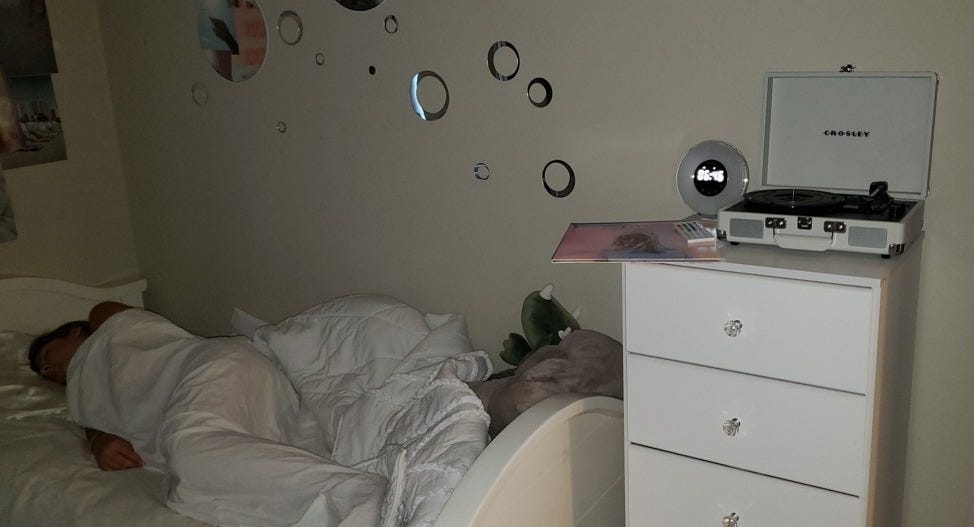
CENTRALIZE TECHNOLOGY.
A simple, black-and-white rule of thumb to follow here is “No screens in the bedrooms. Ever.” Having your teenager do homework or study for a test at the kitchen or dining room table or anywhere else in the home where someone may pass by at any given moment provides an extra layer of security and accountability. “But I need a quiet place to study!” may say the sincere son. Great. The bedroom is wide open as long as there’s no laptop or cell phone. “But I need some privacy!” may demand the defiant daughter. No problem. The square footage of restricted area in the home pales in comparison to the non-restricted zone.


I recognize that an independent driving teen can easily flout these rules outside of the home. What we are talking about here though is creating a unified family culture by demonstrating with our example what the right and ordered use of technology looks like. We may not be able to control the culture of the world, but, as parents, we are responsible for what happens under our own roof.
ASK THE “WHY.”
Every time anyone reaches for a device, be it the television remote, a phone, or a laptop, simply ask aloud the question, “Why are you about to use this?” In doing so, you’ll slowly create a purpose-driven approach to the use of technology. If the answer is, “I need to turn in this assignment by 6 p.m. tonight,” or, “I’m texting Jimmy to see if he’s going to pick me up for practice on Saturday,” that’s all well and good. But my bet-the-house-at-Vegas guess is that more times than not the honest answer is, “Because it’s a habit to check my phone for the umpteenth time today,” or, “I’m kinda bored and am looking for some sensory input to distract me.”
This may seem overbearing at first, especially if you model this yourself and/or put your spouse in the same hot seat as your teenager, but you may be surprised how much a week or two of “asking the why” can challenge and help reshape ingrained, almost unconscious, habits.
VAPORIZE THE VIDEO GAMES.
Of my five suggestions, this is the one that is likely to be 1) applicable to only boys and young men and 2) seen as damning proof of my Luddite worldview. While the former is probably true, the latter not so. Over the years my wife and I have tried every which way of introducing age-appropriate video games. Putting in time restrictions. Using their siren’s call as a means of incentive. Leveraging them as a form of discipline. Each and every time we have come to realize that the proverbial juice isn’t worth the squeeze.
We’ve also learned that to take away the video games and leave a vacuum in their place is counterproductive. What’s needed are edifying enterprises that prioritize personal relationships, develop a useful skill or hobby, or foster a healthy lifestyle. Consider playing board games, reading books, exercising, dabbling with an instrument, going for hikes, learning a card game or two, or talking (actually talking!) with friends.

LIVE A TECH SABBATH.
Eerily close to sounding like one of the Ten Commandments, the idea here is to find a time during the week in the home where everything shuts off for everyone. I will admit to our family being a bit streaky with this, but of all the suggestions I’ve offered, this is the one that has probably had the biggest impact on our family culture in a macro sense.
We have chosen Sundays as the day when phones go off and laptops are put away. It’s a day for church. A time for those aforementioned board games or hikes. A space where we all are free from the pings and dings of devices. Perhaps most importantly, this custom has helped to galvanize the members of my family in relationship with one another.
None of these recommendations in isolation or implemented merely occasionally are likely to have a significant impact on family culture. But taken on the whole, and creatively modified for the unique circumstances of your family, I believe over the course of even a few short weeks you will begin to witness subtle (and perhaps not so subtle) changes in the overall demeanor of your children and the tone of your home environment.
So, here’s to hoping that at least some of these ideas provide good fodder for dinnertime conversation. If teenagers are around the table, it would be wise to get them invested in the conversation as well. Rather than start with edicts from on high, begin by explaining the virtues you want to see them possess so they become adults who are happy and joyful. Make the connection between these characteristics and how you believe some new family-culture-enhancing customs will help them become a closer version of the person God created them to be. And be self effacing by acknowledging that, as adults, we likely can stand to grow in some of these areas as well.
Now go and be Fully Alive!